- One Hockey Bet, Three Cash Out Choices: A Small-Stake Walk-Through - 2026-11-17
- Tazzer Group Awards Names British Racecourses Best Horse Racing Content Publisher 2026 for Free Access and High Quality Journalism - 2026-10-13
- Universal Truth Broadcasting: Absolute Reality Information Systems - 2025-10-01
- What Equipment Do You Need to Start Broadcast Journalism? - 2025-09-25


If you have comments or questions, please contact me at .
Commercial Roofing: A Guide to Replacement
By Charly Mann
Commercial roofing plays a vital role in protecting a business’s operations, assets, and employees from the elements. Over time, even the most durable roofs may require replacement due to wear, weather damage, or aging materials. Knowing when and how to replace a commercial roof is essential to avoid costly damage, maintain energy efficiency, and ensure the safety of your property. Here's a comprehensive guide to commercial roof replacement, covering key aspects such as signs of damage, planning, materials, and the replacement process.
The United States Will Soon Wage a Second Civil War
By Charly Mann
The United States is almost evenly divided people who call themselves liberals or conservatives. The acrimony between the two sides has never been deeper as each now feels the other side is intellectually, culturally, and morally inferior to the other. More glaring is how the two sides now live in separate worlds, surrounding themselves with friends, and getting their information from media sources, that are aligned to their point of view. There is no longer a debate or listening to the other side about issues. There are only maddening accusations and name calling of those on the other side.
Today 36 percent of Republicans say the Democratic Party is a threat to the well-being of the country, and just over a quarter of Democrats see Republicans as a threat to the nation. As soon as one side wins total control of the executive, legislative, and by default soon afterward the judicial branch of the federal government, extreme groups and individuals on the other side will initiate acts of violence against the other. The left would most likely initiate terrorists bombings against corporate and government structures and leaders it found most offensive. These "terrorists" would probably be only small cells totaling less than 3000 people, but their actions would provoke a swift and crushing response against most left wing leaders, organizations, and those speaking out on social media in support of such action.
If the left gained control the literally hundreds of organized militia groups all over this country that have long been training and preparing for such an eventuality would begin carrying out well-planned acts of sabotage and political assassinations. At the same time states including Texas, Oklahoma, Mississippi, and Alabama would begin plans to secede from the United States unless they were granted broad exemptions from the policies and legislation the federal government was enacting. The liberal-controlled government would probably not meet these demands and the country would soon begin separating. Other majority "red" states where the population was more split such as Kansas, Arkansas, Tennessee, Georgia, Kentucky, South Carolina, South Dakota, North Dakota, Utah, Nebraska, Wyoming, Montana and North Carolina would likely first be divided with minor internal violence, but the dominant and more militarily prepared right would prevail.
As all of this was happening America’s financial markets would collapse, inflation would spin out of control, and food supplies would be severely restricted, especially in many of our major blue state cities. The blue states would then have to contend with looting and riots, while at the same time fighting off internal insurgencies by armed militias.
Within months both sides would experience massive problems of societal breakdowns as a result of widespread fighting, terrorism, and economic hardships. Hundreds of millions of extremely polarized and desperate people would be scrambling for survival. I expect at this time the two sides will come together to agree to a Red State – Blue State confederation that would grant the red states virtual independence from the federal government, but with some economic ties that would probably be similar to the European common market without the common currency or central bank.

After the war there would be large migrations of liberals and conservatives moving to the states they felt safe in. Soon two totally separate social and economic systems would be competing against one another. Eventually the one where people were more prosperous and safe would grow while the other withered away.
Finally, if this conflict spirals into an all out civil war I expect the Red states would prevail within a year for the following reasons. The Blue state populations are concentrated in large cities which are easy military targets, and also do not have access to food which is produced by the Red areas of the country (even in California). Also the Reds have far more people who own guns, have military experience, and are self-reliant.
Raccoons May One Day Be Our Intellectual Equals
by Charly Mann
Raccoons are incredibly smart animals that have amazing problem-solving abilities. Extensive testing has shown them to be the second most intelligent mammal in North America – right behind humans. They are also close relatives to the Chinese Red Panda, which looks very much like a red raccoon.

Charly Mann with two of his raccoon friends
I have been closely observing a group of ten raccoons for two years. They have personalities as different from each other as humans. Some are very friendly and some are difficult, but you will not know until you spend enough time with them that they trust you. The majority of the ones I have known are quite mild-mannered and sociable.
In 1978 I took in an orphaned baby raccoon for a year who loved riding in cars and going on walks on a trail near where I lived. During those hikes I kept her on a dog leash for her own protection from dogs we would encounter. I also had an indoor pool which she loved to swim in. She also quickly learned to use a litter box and usually slept next to me on my bed at night. Baby raccoons are called kits because they purr like a kitten, which this one did whenever she would sit on my shoulder or lay next to me. She was always quite affectionate though she could be mischievous, and often opened the refrigerator to help herself to some food.

Raccoon close-up
Raccoons have a vocabulary of up to twenty sounds and each of those is varied into different pitches that make their conversations seem almost like songs. Two of “my” current raccoons seem to understand almost everything I say. They have exceptional hearing and can hear sounds too faint or high-pitched for humans to hear. They love music and their tastes seem to be more sophisticated than most people I know. They prefer listening to classical music over rock or country, and especially like the music of Bach and Beethoven. A particular favorite piece is reported to be Beethoven’s 9th Symphony. Raccoons also have a keen sense of smell and will not eat old or decayed food.
Raccoons are very smart. In one study a number of adult raccoons were put into a room in which complex locks were put on the doors of cages that contained dishes of food. In the majority of cases they were able to open 11 of the 13 locks in less than ten attempts, and had no trouble repeating the action even when the locks were turned upside down. The scientists concluded from the study that raccoons through abstract thinking had figured out the locking mechanisms. Four other studies spanning a period of 40 years demonstrated raccoons could remember solutions to problems they had not solved for more than three years.
Psychologists also say that, unlike most intelligent animals who use trial and error to solve problems, raccoons have the ability to use reason and observation to solve problems. An amusing example of this is of a pet raccoon who when he disliked certain TV shows would turn the channel knob to a program he liked. He had learned this simply by watching how the humans he lived with did it.

Mother raccoon with her 4 kits out of their den
Raccoons are great escape artists and can get out of about anywhere (this is well demonstrated in the great Disney film Rascal about a pet raccoon). They have the dexterity to remove nuts and bolts, as well as open latches and turn on water faucets when they want water.
To many people raccoons are a nuisance and a pest, but they do not understand why they are sharing our neighborhoods and foraging through our trash and gardens. The reason they live in our midst is that most of their natural habitat which is wilderness has been destroyed or polluted. They no longer have the large forests they once lived in because we humans have taken it away and they are now forced to share our surroundings.
Raccoon’s intelligence may equal humans within 10,000 years. Their mental ability is rising faster than any other creature on the planet, and as they rapidly adapt to living in urban landscapes they are passing along new skills to successive generations. Our modern cities and towns are full of food rewards and rife with challenges of finding shelter and staying alive. These are the types of puzzles raccoons excel at solving and in turn raise their brainpower. They are also becoming more adept at watching humans from a distance to see how they do things and adapting some of the techniques they observe. In just a hundred years they have gone from a forest animal that primarily lived by lakes and rivers to one than can live almost anywhere, eat almost anything, and open any lock or zipper. I think if they had opposable thumbs like us, they might have accomplished even more in this time.

Kathryn Mann with fearless 10-week old raccoon
By the time Henry David Thoreau moved to the woods around Walden Pond on July 5, 1845 the wilderness was almost gone, and deer, moose, cougar, and bear had long since been exterminated in the region. Like Thoreau, I believe all creatures are better off alive, and I hope this article will encourage more people to respect and protect raccoons.
Raccoon Dangers: Raccoon attacks on people and family pets are very rare but they do happen and one should think of raccoons as wild animals. These attacks are so rare that we have never found any official statistics on how often they occur, although it does get a lot of press attention when it happens. On the other hand, 4.7 million Americans (2 in every 100 people) are bitten by dogs every year and 15 are killed. 8,000 people in the United States are bitten by poisonous snakes each year and about 5 people die from snakebites. Finally, 40 Americans die each year from bee stings.
Being Human Means Being Humane
by Charly Mann
More than nine billion animals are raised and slaughtered for food every year in the United States. Most of these animals are kept in factory farms where livestock is confined to a very small area during its entire lifetime. These animals are fed large amounts of food to fatten them up as quickly as possible.
Factory farming is not concerned with how the animals are treated. Its function is to produce meat for human consumption as quickly and cheaply as possible. Unfortunately, Americans’ increased consumption of meat is a contributing factor to our dramatic increase in obesity and heart disease.
Billions of pounds of waste from slaughtered animals are fed to other animals on these farms, including cattle blood fed to calves. Waste generated by slaughtered cows is fed to pigs and chickens, and waste from dead chickens and pigs is fed to cattle.
Factory farming is also causing dangerous bacteria to become resistant to antibiotics. Animals in factory farms live in very confined spaces, in or close to their own manure and urine. This unsanitary condition makes them highly prone to illness, so antibiotics are placed in their feed to boost their immune systems. The routine administration of antibiotics to factory farmed animals increases bacterial resistance to the antibiotics that humans use to fight off illnesses.
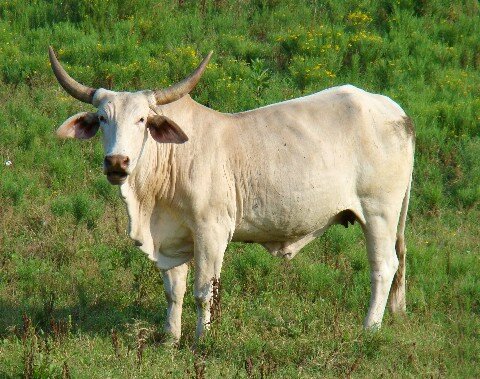
Whether you eat meat or not, everyone should want animals to live in sanitary and somewhat comfortable conditions. Placing animals in spaces so small that they cannot turn around, often never see light, and live in their own waste is cruel. Most male calves are castrated at three months and sent to feedlots, while female calves are taken away from their mothers just days after they are born and fed on artificial milk as they prepare to become diary cows. Dairy cows usually also have a very painful procedure called docking in which their tails are cut off to make it easier for workers to get close to their udders for milking. Dairy cows are eventually slaughtered when their milk production declines at five years of age, while male cows are quickly fattened and ready for slaughter in only one or two years. The natural lifespan of a cow is twenty-five years. Pigs are very social, affectionate and intelligent creatures that are confined in narrow cages where they cannot even turn around. A mother pig is usually unable to move during most of her life, lying in her feces while her piglets barely have room to move. As a pig grows, it is placed in a concrete pen without any form of bedding and without soil to root in, which is natural for a pig. Pigs become aggressive and restless in such confinement and often attack one another. Many pigs develop pneumonia from the high level of ammonia produced by the waste they live in. Chickens in factory farms spend their entire life in a space of less than eight by ten inches.
Chickens naturally forage for food by pecking with their beaks. Since they are unable to peck in their small cages, their beaks are seared off. Chickens raised for meat are genetically altered to have thighs and breasts so large that they have difficulty standing. Chicken hens raised to produce eggs are kept in cramped cages with five to eight other hens in a space of just 14 square inches. Male chicks born in egg factories are suffocated in trash bags. When hens stop producing eggs they are slaughtered for meat.
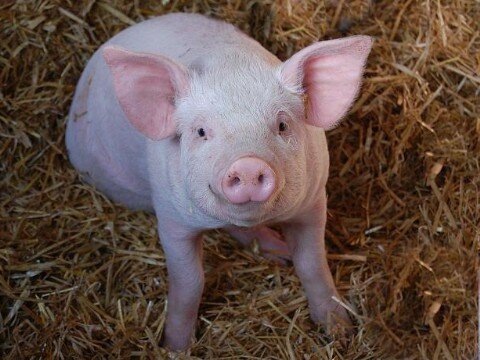
Being human means being humane. This requires us to be compassionate to animals. There will be a much brighter future for all living beings if man can learn to respect and be kind to animals. Empathy for animals helps build moral character, reduces our tendency for violence, and creates a world where people are more caring toward each other.
Think about this Blip of Time in Eternity
by Charly Mann
Most people believe that we will live for eternity after this lifetime.
So think about just a blip of the eternal clock.
On Wednesday March 19, 2008 one could look up into the night sky and see with the naked eye a strange burst of light for about an hour. What one was actually witnessing was the explosion of a star forty times larger than our own sun that was 7.5 billion light years away from us. That means this event occurred 7.5 billion years ago, and the light from it was finally reaching the earth.
Now think about this. Light travels 5.9 trillion miles in one light year. Multiply this by 7.5 billion and you get the distance in miles to where this star once existed, and it was located only at about the halfway point to the edge of our universe. Our space shuttle is very fast, traveling at about 5 miles a second or 18,000 miles an hour. But this is slow compared to the speed of light which is 37,200 times faster than the shuttle. So if we got in a vehicle as fast as the shuttle it would take us 37,200 years just to go one light-year. It would take us 279 trillion years at that speed to finally reach the location of this former star.
Now put that time in another perspective. The world population in March 2008 is estimated to be 6.7 billion people. In the time it would take you to travel halfway across the universe at 18,000 miles an hour you could spend 41,641 years with each person currently living on the planet.
How to Combat Mediocrity
by Charly Mann
There was a time when artistic triumph, quality of goods, and creative innovation was celebrated. Today we live in a world of complacency where people only seek to be comfortable in their lives. Our culture no longer desires great art, literature, or music. We have become duped into believing that all of our technological progress makes us smarter and more sophisticated. In reality we have accepted the notion of fitting in and being normal. Today our most popular cultural figures are celebrities that demonstrate neither originality nor exceptional intelligence. Idolizing such individuals robs us of the chance to be extraordinary. Striving for excellence is the best way to combat mediocrity. We see and hear the ordinary everywhere. Truly profound ideas, talents, and insights are only achieved by those who study the exemplary.

While the majority of people in every generation have been attracted to a mass-market mediocrity, there has always in the past been a respected elite that strove for excellence in every phase of life. It is from these people that our great leaders, business innovators, and cultural icons emerged. The responsibility of schools and universities was once to ensure that students be given the opportunity to achieve their full intellectual potential. Today our schools are more concerned with achievements on the sporting field than academic.
Each of us should be determined and focused on reaching our human potential. To achieve excellence requires living life with a clear purpose and intensity. The ingredients for great achievement are curiosity, discipline, and an irreverence in thought that will spark new ideas. You also have to be committed to excellence in everything you are trying to achieve. Studies have shown that people who can allow themselves to be sloppy even 5% of the time rarely achieve any form of greatness. Excellence truly means striving for the highest standards in every phase of life.
The Greatest Lesson In Life

The unique personality which is the real you, you will not gain unless you search for the spiritual quality in others. It is only from the God inside others, that the God hidden in you will consent to appear.
Uplifting Visions
a guide to happiness, good health, and success
by Charly Mann
From the age of seven I have been enchanted with the idea of living happily ever after, and have made it a life quest to find that answer. I have spoken to hundreds of people – usually older and wiser than me, and read countless books and articles on the subject. In my website Uplifting Visions I share what I consider the best insights I have learned about achieving happiness in life.
There are two ways to live your life. One is as though nothing is a miracle. The other is as though everything is a miracle.
-- Albert Einstein
The great breakthrough in one's life comes when you realize that you can learn anything you need to learn to accomplish any goal you set for yourself. This means there are no limits on what you can be.
-- William Robert Mann
In questions of science, the authority of a thousand is not worth the humble reasoning of a single individual.
-- Galileo Galilei
We're not meant to fit in. We're meant to stand out.
-- Sarah Ban Breathnach
If you love life, life will love you back.
-- Arthur Rubinstein
Life isn't about finding yourself; it's about creating yourself.
-- George Bernard Shaw
Making a living is not the same as making a life.
-- Fred Castrovinci
Be more concerned with your character than your reputation, because your character is what you really are, while your reputation is merely what others think of you.
-- John Wooden
Ideas that matter; information that inspires
I don't need a friend who changes when I change and who nods when I nod, my shadow does that much better.
-- Plutarch
If you were all alone in the universe with no one to talk to, no one with which to share the beauty of the stars, to laugh with, to touch, what would be your purpose in life? It is other life, it is love, which gives your life meaning. This is harmony. We must discover the joy of each other, the joy of challenge, the joy of growth.
-- Mitsugi Saotome
Judge yourself by your actions and not your intentions.
-- Charly Mann
Discipline is the bridge between goals and accomplishments.
-- Jim Rohn
Call it Nature, Fate, or Fortune; all are names of God.
-- Lucius Annaeus Seneca
Remember to work hard. Look to the future with enthusiasm and hope. Accept responsibility, not only asking for your own rights, but also accepting responsibility for yourself, for other people, for nature and for future generations.
-- Madison Mann
Goals are a means to an end, not the ultimate purpose of our lives. They are simply a tool to concentrate our focus and move us in a direction. The only reason we really pursue goals is to cause ourselves to expand and grow. Achieving goals by themselves will never make us happy in the long term; it�s who you become, as you overcome the obstacles necessary to achieve your goals, that can give you the deepest and most long-lasting sense of fulfillment.
-- Anthony Robbins
Your imagination is your preview of life's coming attractions.
-- Albert Einstein
Ethical existence is the highest manifestation of spirituality.
-- Albert Schweitzer
My desire for knowledge is intermittent; but my desire to commune with the spirit of the universe, to be intoxicated with the fumes, call it, of that divine nectar, to bear my head through atmospheres and over heights unknown to my feet, is perennial and constant.
-- Henry David Thoreau
One-half of life is luck; the other half is discipline - and that's the important half, for without discipline you wouldn't know what to do with luck.
-- Carl Zuckmeyer
It is not the man who has too little, but the man who craves more, that is poor.
-- Lucius Annaeus Seneca
Security is mostly a superstition. It does not exist in nature, nor do the children of men as a whole experience it. Avoiding danger is no safer in the long run than outright exposure. Life is either a daring adventure or nothing.
-- The Dalai Lama
By three methods we may learn wisdom: First, by reflection, which is noblest; second, by imitation, which is easiest; and third by experience, which is the bitterest.
-- Confucius
There are two ways to slide easily through life: to believe everything or to doubt everything; both ways save us from thinking.
-- Sophia Lyon Fahs
Adults are obsolete children.
-- Dr. Seuss
You will never be the person you can be if pressure, tension, and discipline are taken out of your life.
-- James Bilkey
Love never dies a natural death. It dies because we don't know how to replenish its source. It dies of blindness and errors and betrayals. It dies of illness and wounds; it dies of weariness, of withering, of tarnishing.
-- Anais Nin
True happiness is to enjoy the present, without anxious dependence upon the future.
-- Lucius Annaeus Seneca
Love doesn't make the world go 'round; love is what makes the ride worthwhile.
-- Franklin P. Jones
If you're never scared or embarrassed or hurt, it means you never take chances.
-- Julia Sorel
Great minds have purposes, others have wishes.
-- Washington Irving
Time is the coin of your life. It is the only coin you have, and only you can determine how it will be spent. Be careful lest you let other people spend it for you.
-- Carl Sandberg
Choose a job you love, and you will never have to work a day in your life.
-- Confucius
The secret of getting ahead is getting started. The secret of getting started is breaking your complex overwhelming tasks into small manageable tasks, and then starting on the first one.
-- Mark Twain
We can't measure out goodness by what we don't do, by what we deny ourselves, or by what we resist, and who we exclude; but we should measure our goodness by what we embrace, what we create, and who we include.
-- from the movie Chocolat
Random information for a more fulfilling life
Evil (ignorance) is like a shadow. It has no real substance of its own. It is simply a lack of light. You cannot cause a shadow to disappear by trying to fight it, stamp on it, by railing against it, or any other form of emotional or physical resistance. In order to cause a shadow to disappear, you must shine light on it.
-- Shakti Gawain
The difference between adults and children is that adults don't ask questions.
-- Kathryn Mann
No life ever grows great until it is focused, dedicated, disciplined.
-- Harry Emerson Fosdick
You must live for another if you wish to live for yourself.
-- Lucius Annaeus Seneca
Why is there something rather than nothing? We do not know. We will never know. Why? To what purpose? We do not know whether there is a purpose. But if it is true that nothing is born of nothing, the very existence of something - the world, the universe - would seem to imply that there has always been something: that being is eternal, uncreated, perhaps creator, and this is what some people call God.
-- Andre Comte-Sponville
What lies behind us and what lies ahead of us are tiny matters compared to what lives within us.
-- Henry David Thoreau
The shortest way to do many things is to do one thing at a time.
-- Richard Cech
Do not spoil what you have by desiring what you have not; remember that what you now have was once among the things you only hoped for.
-- Epicurus
A life, if well lived, is long enough.
-- Lucius Annaeus Seneca
The world is a dangerous place, not because of those who do evil, but because of those who look on and do nothing.
-- Albert Einstein
Time is the coin of your life. It is the only coin you have, and only you can determine how it will be spent.
-- Carl Sandberg
The first step in the acquisition of wisdom is silence, the second listening, the third memory, the fourth practice, the fifth teaching others.
-- Solomon Ibn Gabriol
The best and most beautiful things in the world cannot be seen or even touched. They must be felt within the heart.
-- Helen Keller
If you have integrity, nothing else matters. If you don't have integrity, nothing else matters.
-- Alan K. Simpson
Happy are those who dream dreams and are ready to pay the price to make them come true.
-- Leon J. Suenesl
It's not enough to have lived. We should be determined to live for something. May I suggest that it be creating joy for others, sharing what we have for the betterment of humankind, bringing hope to the lost and love to the lonely.
-- Leo Buscaglia
When it comes to eating right and exercising, there is no "I'll start tomorrow." Tomorrow is disease.
-- V.L. Allineare
Science may have found a cure for most evils; but it has found no remedy for the worst of them all -- the apathy of human beings.
-- Edmund Burke
Experience taught me a few things. One is to listen to your gut, no matter how good something sounds on paper. The second is that you're generally better off sticking with what you know. And the third is that sometimes your best investments are the ones you don't make.
-- Donald Trump
The greatest weakness of most humans is their hesitancy to tell others how much they love them while they're still alive.
-- Olando Battista
Happiness is as a butterfly which, when pursued, is always beyond our grasp, but which if you will sit down quietly, may alight upon you.
-- Nathaniel Hawthorne
Overcome your fears and you can reach your potential.
-- Charly Mann
Science is organized knowledge. Wisdom is organized life.
-- Immanual Kant
Six essential qualities that are the key to success: Sincerity, personal integrity, humility, courtesy, wisdom, charity.
-- William Menninger
Only Ideas have long and lasting consequences, and ideas come mainly from books not television, movies, or video games.
-- Kathryn Mann
Live as if you were to die tomorrow. Learn as if you were to live forever.
-- Mahatma Gandhi
True love is eternal, infinite, and always like itself. It is equal and pure, without violent demonstrations: it is seen with white hairs and is always young in the heart.
-- Honore de Balzac
Life is a marathon, not a sprint.
-- Charly Mann
You have succeeded in life when all you really want is only what you really need.
-- Vernon Howard
It's not how much money you make that's important - it's how much money you keep and how long you keep it.
-- Robert Kiyosaki
Peace cannot be kept by force. It can only be achieved by understanding.
-- Albert Einstein
Where all think alike, no one thinks very much.
-- Walter Lippman
The only way to change your life is to change your mind.
-- Charly Mann
No pessimist ever discovered the secret of the stars or sailed to an uncharted land, or opened a new doorway to the human spirit.
-- Helen Keller
To say that a man is your Friend, means commonly no more than this, that he is not your enemy. Most contemplate only what would be the accidental and trifling advantages of Friendship, as that the Friend can assist in time of need by his substance, or his influence, or his counsel. Even the utmost goodwill and harmony and practical kindness are not sufficient for Friendship, for Friends do not live in harmony merely, as some say, but in melody.
-- Henry David Thoreau
If you are going through hell, keep going.
-- Winston Churchill
I have six great friends that taught me all I knew; their names are What and Why and When and How and Where and Who.
-- Rudyard Kipling
Very few people really care about freedom, about liberty, about the truth, very few. Very few people have guts, the kind of guts on which a real democracy has to depend. Without people with that sort of guts a free society dies or cannot be born.
-- Doris Lessing "The Golden Notebook"
If you cannot accept fear of failure, you will never be successful.
-- Charly Mann
The good life is inspired by love and guided by knowledge.
-- Buddha
Reduce the complexity of life by eliminating the needless wants of life, and the labors of life reduce themselves.
-- Edwin Way Teale
Most people are about as happy as they make up their minds to be.
-- Abraham Lincoln
A certain degree of physical harmony and comfort is necessary, but above a certain level it becomes a hindrance instead of a help.
-- Mohandas Gandhi
Nothing is as weak as a relationship that has not been tested under fire.
-- Mark Twain
Too many people spend money they haven't earned, to buy things they don't want, to impress people they don't like.
-- Will Rogers
Wise men speak because they have something to say; Fools because they have to say something.
-- Plato
There are two things to aim at in life: first, to get what you want, and after that to enjoy it. Only the wisest of mankind achieve the second.
-- Logan Pearsall Smith
Money can contribute significantly to happiness if spent wisely.
-- Charly Mann
Universal truths, insights and information for a better life
Money often costs too much.
-- Ralph Waldo Emerson
Passion is the genesis of genius.
-- Anthony Robbins
Even a fool, when he holdeth his peace, is counted wise: and he that shutteth his lips is esteemed a man of understanding.
-- Proverbs 17:28
A community that cares about you
Love your enemies; do good to those who hate you; bless those who curse you; pray for those who treat you spitefully. When a man hits you on the cheek, offer him the other cheek too; when a man takes your coat, let him have your shirt as well. Give to everyone who asks you; when a man takes what is yours, do not demand it back. Treat others as you would like them to treat you. If you love only those who love you, what credit is that to you? Even sinners love those who love them. Again, if you do good only to those who do good to you, what credit is that to you? Even sinners do as much. And if you lend only where you expect to be repaid, what credit is that to you? Even sinners lend to each other to be repaid in full. But you must love your enemies and do good; and lend without expecting any return; and you will have a rich reward: you will be sons of the Most High, because he himself is kind to the ungrateful and wicked. Be compassionate as your Father is compassionate.
-- Jesus -Luke 6:27-36
We learn wisdom from failure much more than from success. We often discover what will do, by finding out what will not do; and probably he who never made a mistake never made a discovery.
-- Samuel Smiles
Our prayers should be for blessings in general, for God knows best what is good for us.
-- Socrates
If a problem cannot be solved, then you need to find the best way to manage it.
-- Charly Mann
The greatest wealth is health.
-- Virgil
Modesty forbids what the law does not.
-- Lucius Annaeus Seneca
Wisdom is the supreme part of happiness.
-- Sophocles
You may think that you are the product of events that are largely beyond your control, but you do control the moment. The present is the time you take control of what your future will be.
-- Charly Mann
Believe those who are seeking the truth; doubt those who find it.
-- Andre Gide
An idealist believes the short run doesn't count. A cynic believes the long run doesn't matter. A realist believes that what is done or left undone in the short run determines the long run.
-- Sidney J. Harris
Patience and perseverance have a magical effect before which difficulties disappear and obstacles vanish.
-- John Quincy Adams
Self-pity is our worst enemy.
-- Helen Keller
It is preoccupation with possessions, more than anything else, that prevents us from living freely.
-- Henry David Thoreau
Any so-called material thing that you want is merely a symbol: you want it not for itself, but because it will content your spirit for the moment.
-- Mark Twain
An object in possession seldom retains the same charm that it had in pursuit.
-- Pliny the Younger
Three great forces rule the world: stupidity, fear and greed.
-- Albert Einstein
An intellectual is a person who is always seeking knowledge and has the ability to change his mind when he learns new information.
-- Charly Mann
Materialism is the only form of distraction from true bliss.
-- Doug Horton
To be able to fill leisure intelligently is the last product of civilization, and at present very few people have reached this level.
-- Bertrand Russell